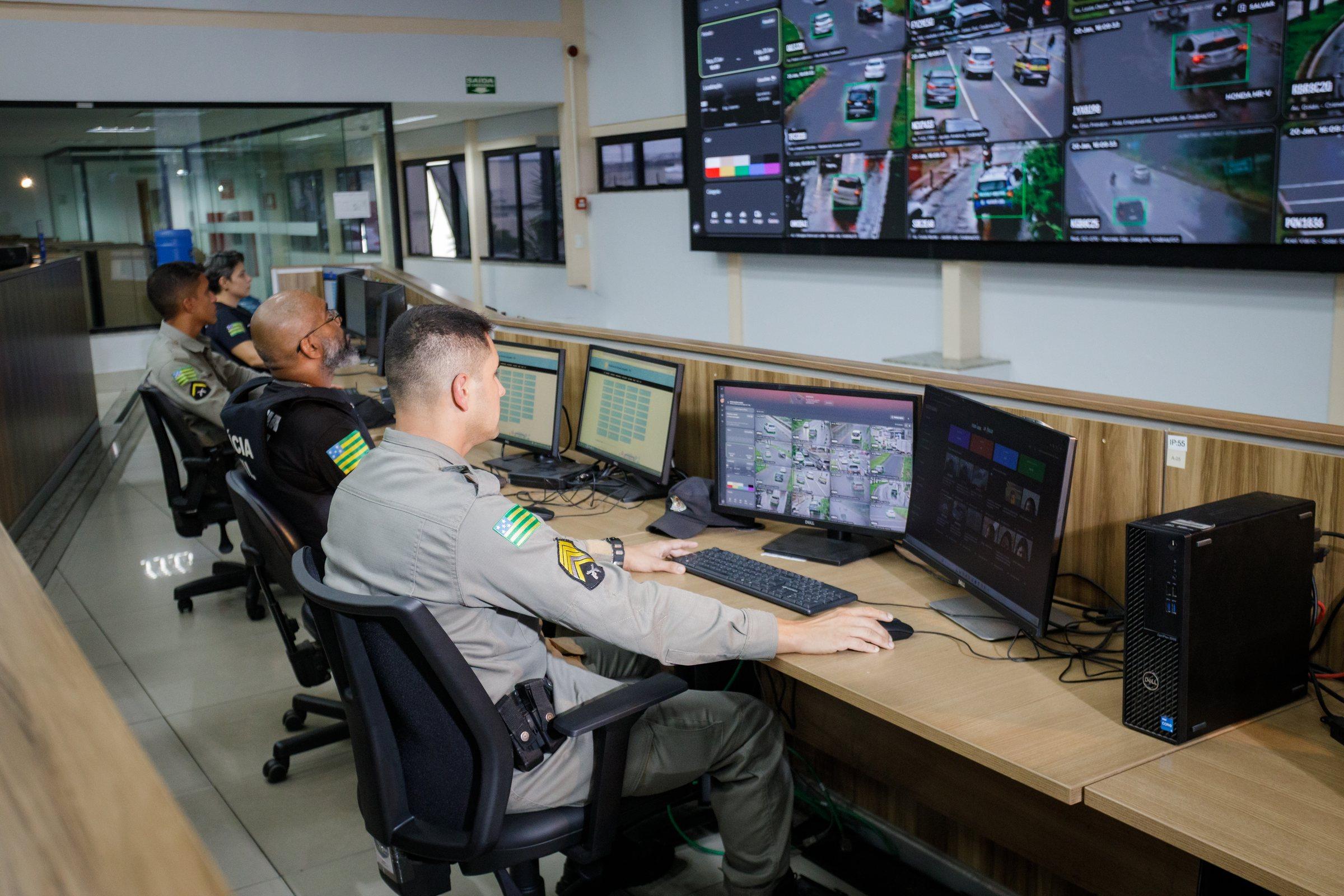
While the market still measures innovation by how much hardware is installed, Pax is betting on AI to build a platform that keeps evolving alongside police forces.
Brazil keeps increasing its investment in public safety, and historically much of that money has gone into physical, visible equipment — cameras, patrol cars, hardware. That foundation matters and remains necessary. Even so, most crimes still go unsolved: roughly 6 in every 10 homicides in the country are never cleared, according to Instituto Sou da Paz. The bottleneck today is not a lack of data — it is the ability to turn that enormous volume of information into answers. That is exactly where artificial intelligence comes in.
The difference already shows in practice. In July, a jewelry store theft at a shopping mall in Goiânia was solved in under 24 hours with the support of artificial intelligence: three suspects were arrested in the Federal District's surrounding region, and part of the stolen goods was recovered.
Pax proposes this new path. Founded as Paladium in 2024, when it began building Brazilian public-safety technology from scratch, the company developed — without giving up on hardware — a cloud-based artificial intelligence platform that amplifies the infrastructure the state already owns and puts more capability in the hands of police: more cases solved, less time spent investigating, and a reduction in the costs crime imposes on society. The value lies in the software operated by the officer, which interprets footage, connects government databases, identifies patterns and cross-references information to guide the investigation.
In practice, the platform works as an intelligence assistant for police operations — which is why officers themselves have taken to calling it "the ChatGPT of policing". The software reconstructs a vehicle's route across dozens of cameras, locates cars by their characteristics even without reading the license plate, cross-references official databases and allows searches by description, such as identifying a dark-colored vehicle that passed a given point at a given time. From there, it hands the officer actionable connections and alerts, anticipating movement instead of merely recording what already happened.
A system that is always up to date
Running in the cloud lets the tool receive continuous updates. The artificial intelligence takes on new capabilities and learns from officers' daily use, with no need for public security departments to replace equipment. The technology therefore keeps pace with changes in operational routine.
Simplicity and data protection
All of this analytical capability was designed around the tool's end user: the officer working on the front line. Rather than presenting complex screens or an excessive volume of data, the system's interface processes raw information and delivers it in structured form.
Handling sensitive information demands an architecture of trust — and that is how the platform was designed from the outset. All material captured by the cameras and processed by the software belongs exclusively to the public agency and remains on official servers, on Brazilian soil. Pax acts solely as the provider of the processing tool: it does not own the data and has no free access to it. Use is restricted to previously credentialed public safety professionals, under strict access protocols. And every query made on the platform generates an automatic audit record showing who accessed what, and when. Instead of opening a door to abuse, the technology creates a trail of accountability: public oversight, traceability, and a concrete barrier against leaks.
Today the company is one of the only ones in the sector in Brazil to hold the main international certifications, such as ISO 27001, the international standard for establishing, implementing, maintaining and continually improving an Information Security Management System (ISMS).
The future of public safety in Brazil
This is the meaning of the transition Brazilian public safety is going through. Technology stops being a recorder of evidence and becomes an instrument for anticipating and solving crime. By turning the vast volume of urban data into immediate alerts and connections, the platform expands the tactical capability of police forces — in a single piece of software, without swapping out equipment at every advance.
In practice, it changes the dynamics of policing on the street and brings Brazil closer to the practices of police forces that already treat data analysis as standard. In the end, the logic is simple: less unsolved crime, and more peace for the people who live in these cities.